
Running a Sex Offender Check in Duplin County
The North Carolina Sex Offender and Public Protection Registry is the primary public channel for Duplin County. It offers person, location, status, registration-number, and map searches. No account or fee is required after the user accepts the terms. The SBI publishes the statewide interface, while the Duplin County sheriff performs local registration and verification duties.
Start with the type of fact already known. Use the county filter for a broad Duplin view, a name when identifying information is available, or an address search for neighborhood awareness. A registration number is the strongest direct key. A map search can use an address or coordinates. Always open the full profile because the result list alone cannot show all public status and offense details.
The registry's official search interface shows the controls used for a Duplin County sex offender check.
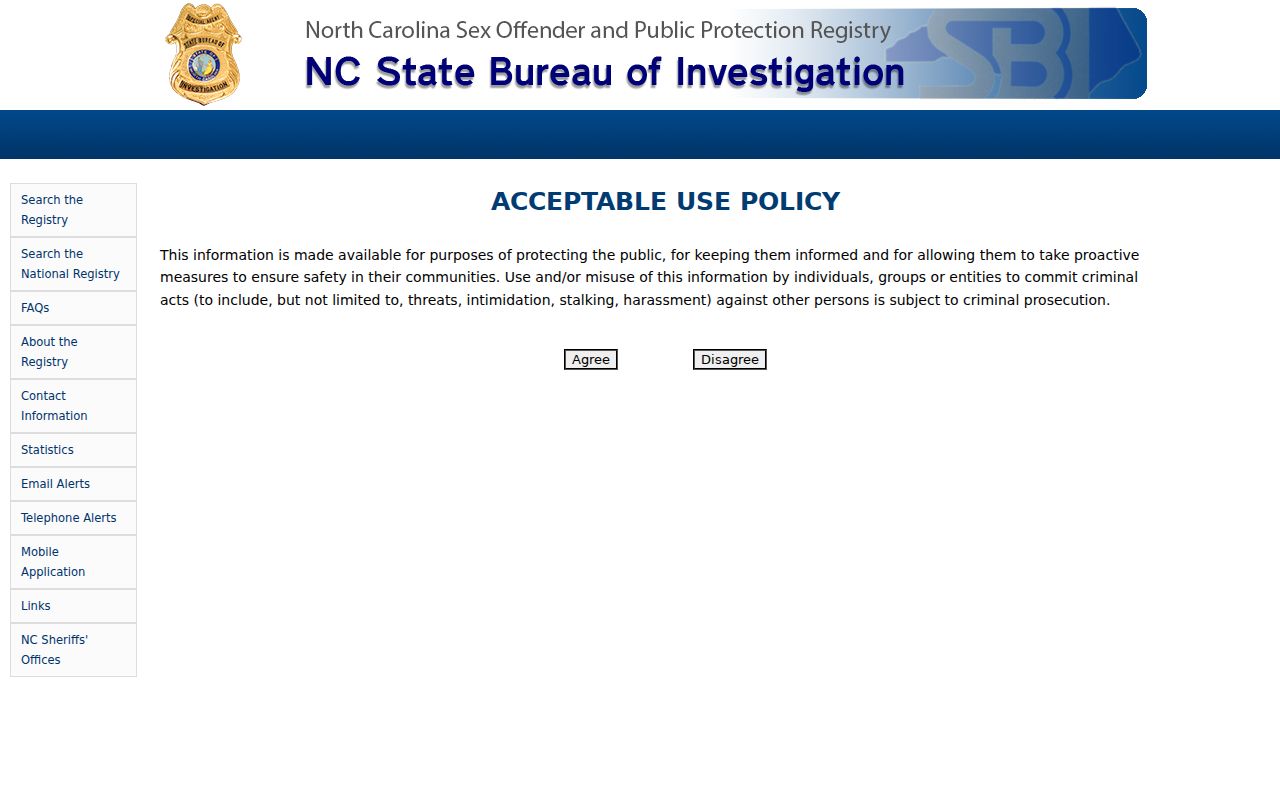
The image reflects the public system itself without republishing a private person's registry profile.
Duplin Registry Acceptable-Use Gate
The official registry opens with an Acceptable Use Policy and Agree or Disagree buttons. A person must accept that policy before searching. The system is intended for public protection, information, and proactive safety. It is not a cue to contact, follow, threaten, or confront anyone listed.
The gate matters because registry data can be misread. A profile can change when a person moves, verifies an address, enters custody, or changes status. SBI also warns that data depends in part on reports from registrants and sheriffs. Search results should support safety planning and a call to law enforcement when there is a genuine concern, not direct action against a registrant or household.
The Duplin County Sheriff's Office page is the local public-safety starting point for registry concerns tied to Duplin County.
Searching the North Carolina Sex Offender and Public Protection Registry
The registry supports four main routes: address or map, person and county filters, sex registration number, and latitude/longitude. A Duplin County search can combine a name with county, city, ZIP, age, custody inclusion, or status. The county dropdown uses Duplin value 031. Search one path at a time, then compare the profile's name, aliases, physical description, address, photograph, registration number, and offense information.
- Open the official registry, read the Acceptable Use Policy, and select Agree.
- Choose a name, address, county, ZIP, registration-number, or map route. Select Duplin when using the county filter.
- Review the result list and compare several public identifiers. Include aliases or incarcerated people only when those options fit the search.
- Open the full profile and read the registration status, category, address, offense information, and update details before acting.
| Field | Type | Required | Duplin Search Use |
|---|---|---|---|
| Street / City / ZIP | Text | Address path | Find a North Carolina address and map nearby results |
| Last / First Name | Text | One category required | Search a person; alias names are included by default when enabled |
| County | Dropdown | Optional | Select Duplin, value 031 |
| Status | Dropdown | Optional | Limit results by one of nine public status labels |
| Sex Registration Number | Text | Alternative | Use the unique number when known |
| Latitude / Longitude | Text and map | Map path | Map a coordinate within North Carolina |
Four Duplin Registry Search Routes
A broad county search answers who appears under the selected Duplin filter at that moment. A name search is better for a known person, and the Include Alias Names option can catch a listed alias. Include Incarcerated Offenders is checked by default. An address search focuses on place, while registration-number and coordinate searches supply more exact starting points.
No route proves that the list is complete. Juvenile delinquency adjudications do not appear. Not every sex offense creates a registration duty, and conduct never reported to authorities cannot appear. Status and address data can also change. Only fingerprint comparison can positively identify a person, so similar names or physical traits should never stand alone.
The SBI registry program explanation describes the state agency's role.
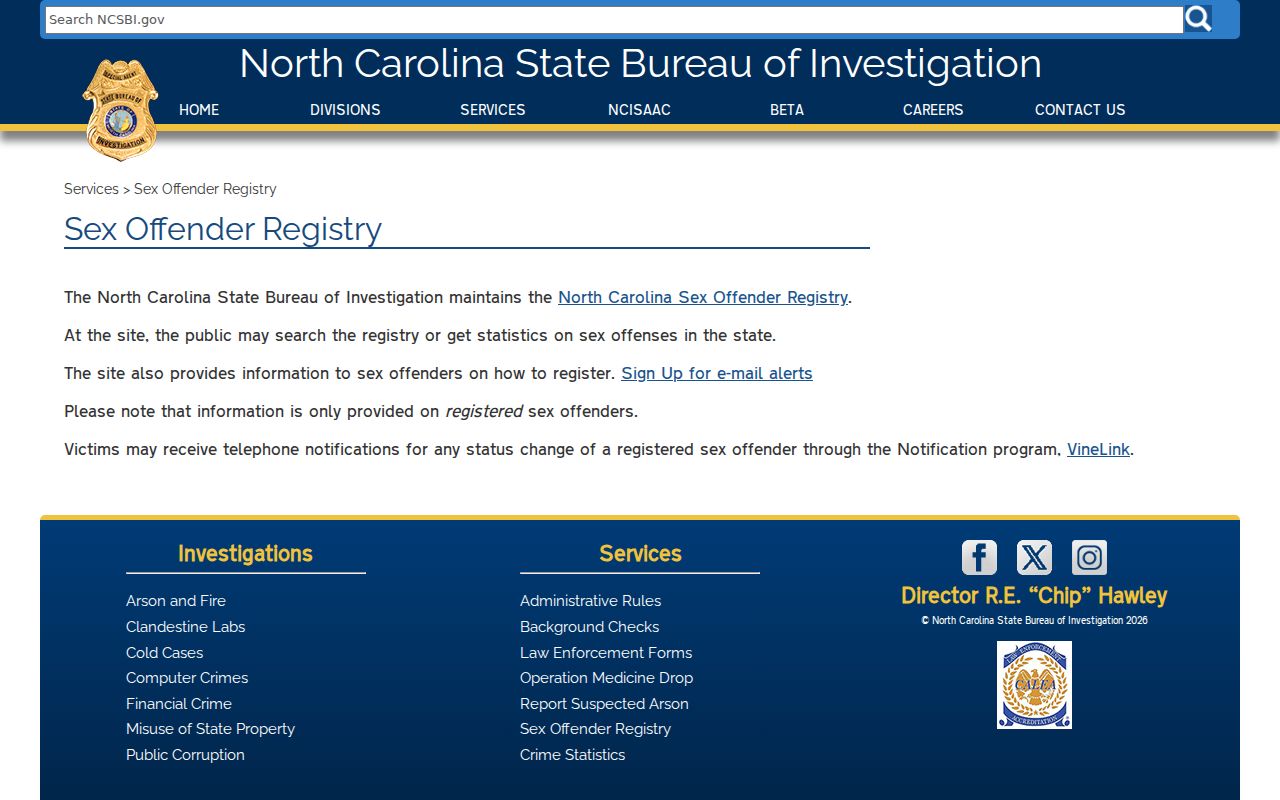
That official overview supplies context that a result list cannot, including the division between SBI publication and sheriff registration work.
Note: SBI registry totals are approximate because of processing delays, system errors, and the exclusion of pending statuses.
What a Registry Profile Shows
A public profile can show current photographs, a primary name and aliases, demographic and physical descriptors, a public address and map, registration number, status or category, and offense or conviction information. Those fields help distinguish records and understand why the entry exists. They should be read together, not reduced to one photo or one address.
| Name & Aliases | The primary published name and any aliases included on the public profile |
|---|---|
| Photo & Description | Current published images plus demographic and physical descriptors |
| Registered Address | The public address and map information available for the entry |
| Registration Number | A unique public key that can be used for a direct registry search |
| Offense Information | Published offense and conviction details supporting registration |
| Status & Category | Registration state, including public compliance or special-category labels |
Sheriffs collect more data than the public page necessarily displays. North Carolina law includes fingerprints, driver-license information, certain online identifiers, and work or school information among collected items. Do not assume all such fields are public. Victim identity, confidential online identifiers, and other protected data do not become public simply because a registry profile exists.
Duplin Registry Status Labels
The status dropdown has nine labels: Registered, Pending Registration, Failure to Register, Failure to Verify Address, Failure to Change Address, Sexual Predator, Aggravated, Nonresident, and Recidivist. These are search filters and registry categories. They are not a public federal Tier I, II, or III system.
That distinction prevents a common error. North Carolina does not use federal tier numbers as its public-facing classification scheme. “Registered” indicates the record's current public status in the system, while failure labels flag a registration or verification issue. Special labels such as Recidivist or Aggravated relate to statutory categories and can affect duration or verification duties.
An inaccurate or missing Duplin County listing should be reported to the sheriff with concrete details. Use the official Duplin sheriff contact page or call 910-296-2150. Do not confront the person named in a disputed entry.
Registration Requirements and Levels in North Carolina
North Carolina generally requires initial registration with the sheriff within three business days after release or arrival, or immediately after a qualifying conviction without active imprisonment. Rules differ for some nonresident workers and students. Ordinary verification mail must be returned in person within three business days. A knowing failure to register, report a change, or verify truthfully can be a Class F felony.
| North Carolina Category | Duration | Verification |
|---|---|---|
| Ordinary Part 2 registrant | Minimum 30 years from initial county registration | Semiannual, at the anniversary and six months later |
| Ordinary petition option | May petition Superior Court after 10 years; removal is not automatic | Court applies statutory and federal criteria |
| Recidivist, aggravated offense, or court-classified sexually violent predator | Lifetime, generally not terminable under G.S. 14-208.23 | Every 90 days under G.S. 14-208.24 |
A petition after ten years requires more than the passage of time. The court considers statutory and federal criteria, later registry offenses, and whether the person presents a current or potential threat. A denial permits a later petition after one year. The Duplin Clerk of Superior Court maintains the local court record, but the governing statute controls eligibility.
Duplin Registry Address Alerts
The SBI's address-alert signup can send email alerts for one-, three-, or five-mile areas around multiple North Carolina addresses. This tool turns a repeated manual neighborhood search into a notice when covered registry information changes. Use an address that matters to a personal or family safety plan, then choose the smallest useful radius to limit unrelated notices.
NC SAVAN adds phone, email, text, and TTY notification choices for covered county inmates, state prisoners, people under supervision, and registrants. Those alerts serve a different purpose from the registry's address radius. One tracks covered status events. The other watches a geographic area. Neither replaces an emergency call or direct verification with the Duplin County sheriff.
The Duplin sheriff services page provides local agency links and contact routes.
Duplin Offender Searches Beyond North Carolina
A county filter only searches the North Carolina registry. For a move across a state line or a broader family-safety question, use the U.S. Department of Justice National Sex Offender Public Website. NSOPW searches participating state, territorial, and tribal registries through one federal interface. It supplements the North Carolina search and does not replace the source profile.
The official national search presents the cross-state layer used after a Duplin County registry check.
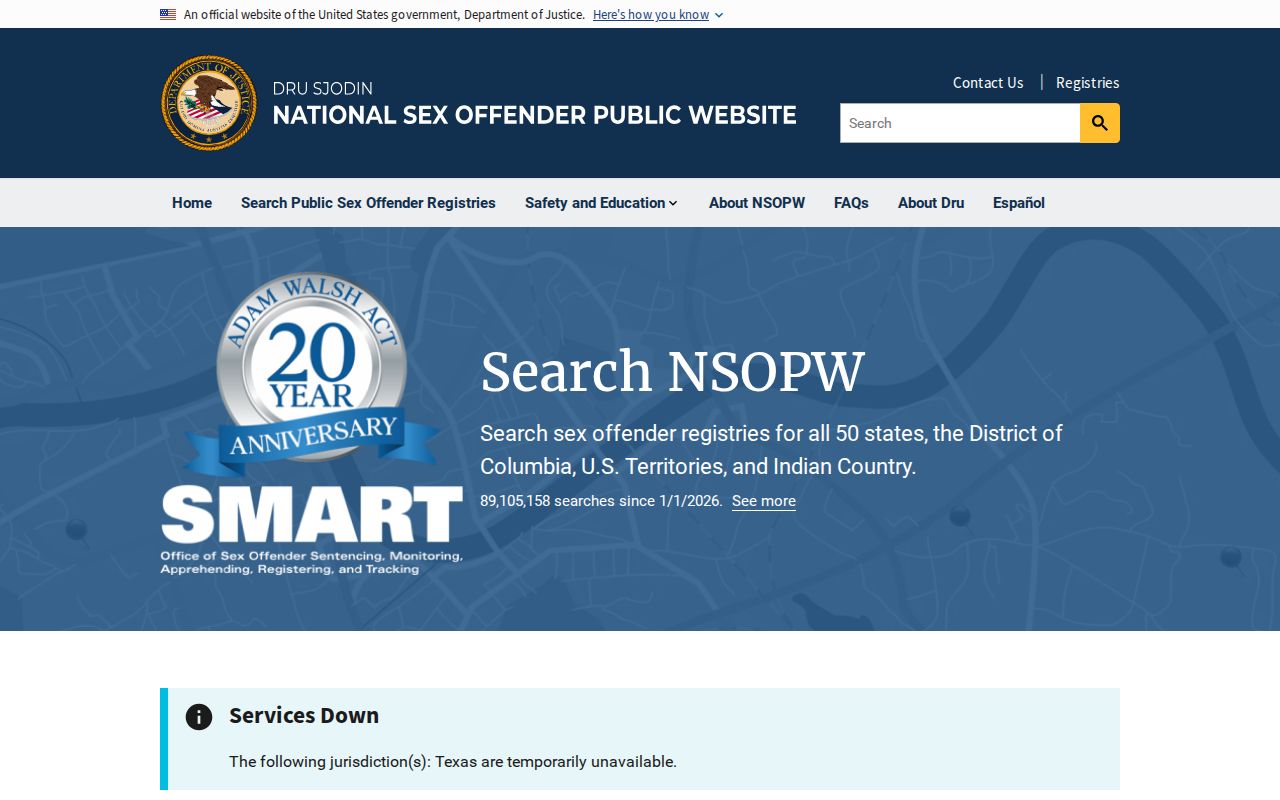
A useful match should still be opened in the originating jurisdiction's registry so its current fields, definitions, and local contact can be read.
Different states publish different categories and fields. Do not force North Carolina's ordinary, recidivist, aggravated, or sexually violent predator labels into another state's scheme. When NSOPW returns no record, remember that registry scope and reporting rules still govern what can appear.
Lawful Use and Community Notification
Registry information is meant for awareness and proactive safety. Use a profile to plan, subscribe to address alerts, or give law enforcement a precise concern. If a Duplin County entry appears inaccurate, report the issue to the sheriff. If someone may be violating a registration duty, provide the known name, address, registration number, and observed facts without confronting the person.
North Carolina distinguishes a 1,000-foot residential restriction in G.S. 14-208.16 from premises restrictions in G.S. 14-208.18. They are not the same rule, and application depends on the statutory category and facts. A map pin alone cannot decide whether a residence or presence violates the law.
The official text of G.S. 14-208.10 governs public access to qualifying registry information.
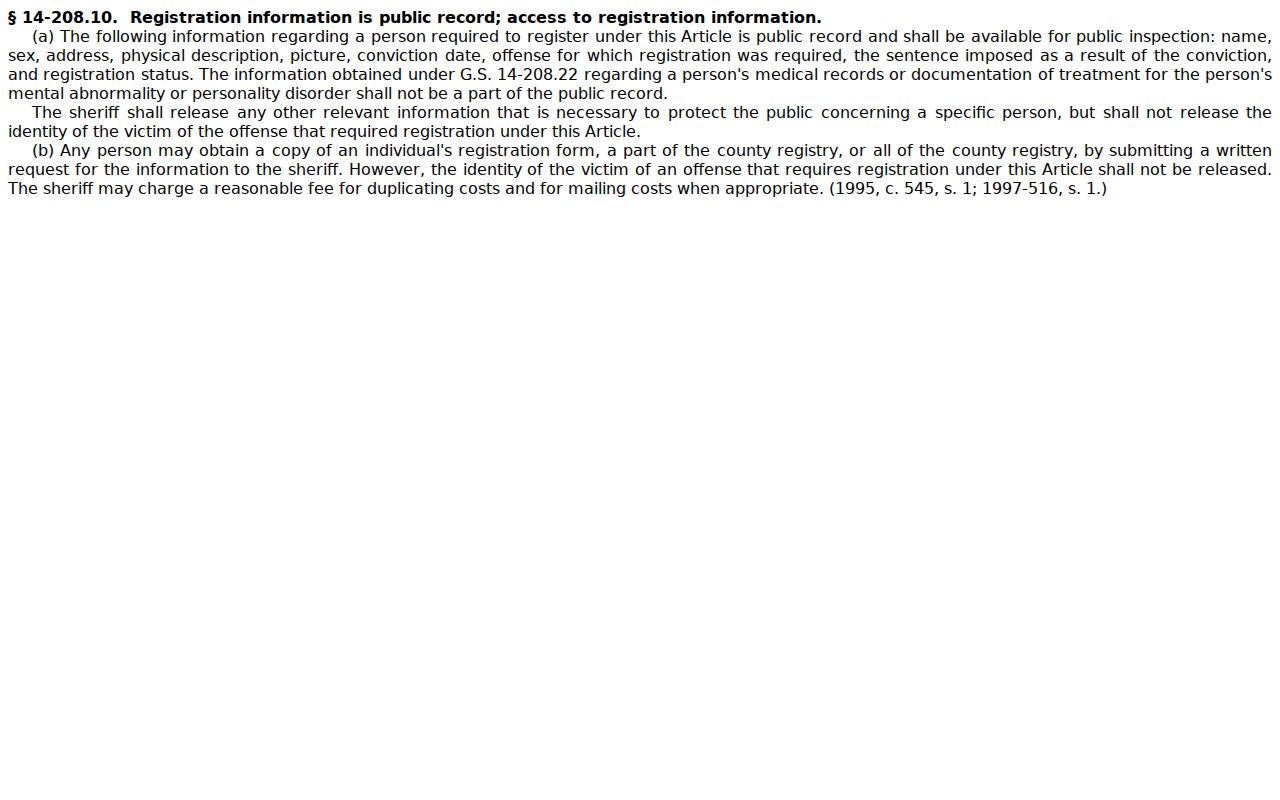
The law supports public access through SBI and sheriff channels while preserving legal limits on how the data may be used.
Registry misuse can be a crime: G.S. 14-208.10 makes specified registry information public, but public access does not authorize threats, stalking, harassment, or property damage. The registry's acceptable-use policy warns that criminal misuse may be prosecuted.
Threats, intimidation, stalking, and vigilantism undermine lawful community notification. Call 911 for an immediate threat. For a nonurgent Duplin registry question, use the sheriff's main line and allow trained officials to verify the facts.