
How to Check Criminal History in Duplin County
Begin with the question the record must answer. The North Carolina eCourts Portal is useful for a known court case, charge, or party name. Filter the location to Duplin County and read the register of actions and each charge disposition. For a recent sheriff arrest or current county custody, Citizen Connect is the better first stop. A certified Duplin-only name search comes from the Clerk of Superior Court, while a fingerprint-linked review of your own statewide record comes from SBI. Older files and unclear online entries still call for a clerk or agency request.
Gather a full legal name, known aliases, an approximate date, and any case, incident, or citation number. Name-only results can join the wrong person to a file, especially when names are common. Use public identifiers only, and compare dates and the record's source.
- Search eCourts by party or case number, select Duplin County, and narrow the category to criminal or infraction.
- Open the matching case and read the current disposition, not just the first charge caption.
- Check Citizen Connect when the question concerns a sheriff incident, booking, or present confinement.
- Ask the record creator for missing material: the clerk for a case, sheriff or town police for a report, and NCDAC for state custody.
- Use the certified clerk search or SBI Right to Review when the purpose requires an official result or review of your own state history.
Portal fields vary with the selected search tab. The Duplin County filter is vital because a statewide name query can mix people who share a name.
| eCourts field | Use | Format note |
|---|---|---|
| Search by | Choose case, party, attorney, or citation path | The available fields change by tab |
| Location / County | Limit results to Duplin County | Optional in the form, essential for local results |
| Case Number | Reach a known file directly | Use the full year, type, and count sequence |
| Party name | Search last, first, and middle name | Try legal name and known aliases separately |
| Filed dates / case type | Narrow a broad result set | Select criminal or infraction as appropriate |
The official Duplin court hub shows where court calendars, services, and case access begin.
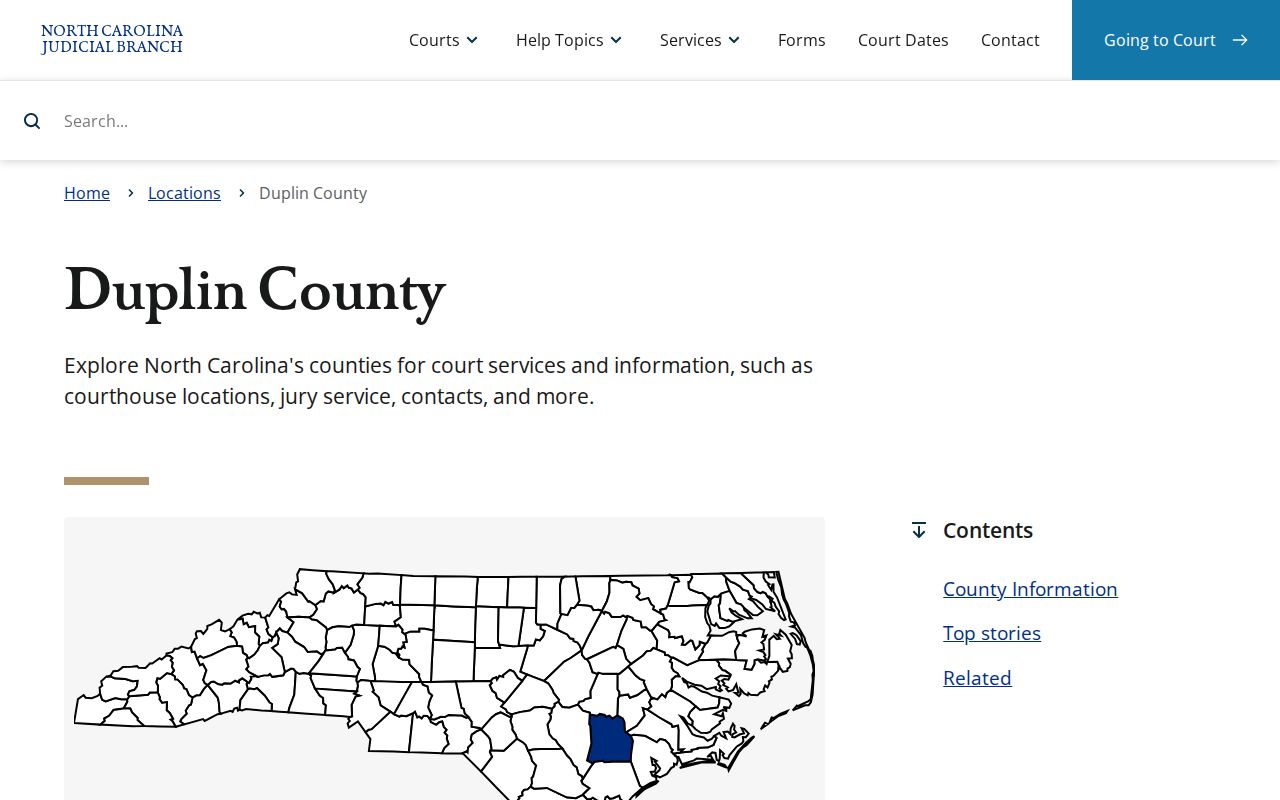
That court channel complements sheriff and state records because each office answers a different part of the search.
Five Duplin Criminal Record Systems
No single Duplin County database is a full criminal history. eCourts and the clerk hold prosecution files. Citizen Connect displays selected sheriff incidents, arrests, and confinement data. SBI maintains fingerprint-supported state criminal history. NCDAC publishes records tied to state prison and community supervision. Federal cases and custody remain in separate federal systems.
The local flow is straightforward even when the files are not: arresting agency → Duplin Detention Center → magistrate and district attorney → District or Superior Court → clerk disposition → SBI reporting. State custody or supervision then adds an NCDAC layer. A federal charge follows a separate federal route.
A record can move through several stages. An arresting agency starts the report, detention creates a booking entry, a magistrate sets initial release terms, and the clerk records the prosecution. Fingerprints and later dispositions may then reach SBI. Gaps or delays are possible at each handoff.
Official North Carolina Background Checks
North Carolina has no general public, pay-per-name SBI portal. The Duplin Clerk of Superior Court offers a certified search of Duplin court records for $25 using form AOC-CR-314. It may be ordered for oneself or another person, but it remains a name-based, single-county court search. A public terminal at a courthouse can provide a free noncertified county or statewide court search, though printing may cost extra. The Judicial Branch advises people performing a background check to use the clerk rather than treating Portal as the official product.
For personal state record review, SBI requires all ten fingerprints on an FD-258 card, its Right to Review form, and a $14 certified check or money order. Results return by first-class mail, and SBI estimates up to 20 business days. The Duplin sheriff's archived schedule listed fingerprint service at $10, but the appointment and current charge should be confirmed with the office.
| Official product | Scope | Located fee |
|---|---|---|
| Certified clerk search | Duplin County court records | $25 |
| Courthouse terminal | County or statewide court index | Free search; possible print fee |
| SBI Right to Review | Your own statewide fingerprint record | $14, plus fingerprint cost |
| FBI identity summary | Your own national fingerprint history | $18 federal fee; channeler may add fees |
The Judicial Branch background-check overview compares the clerk, terminal, and SBI routes.
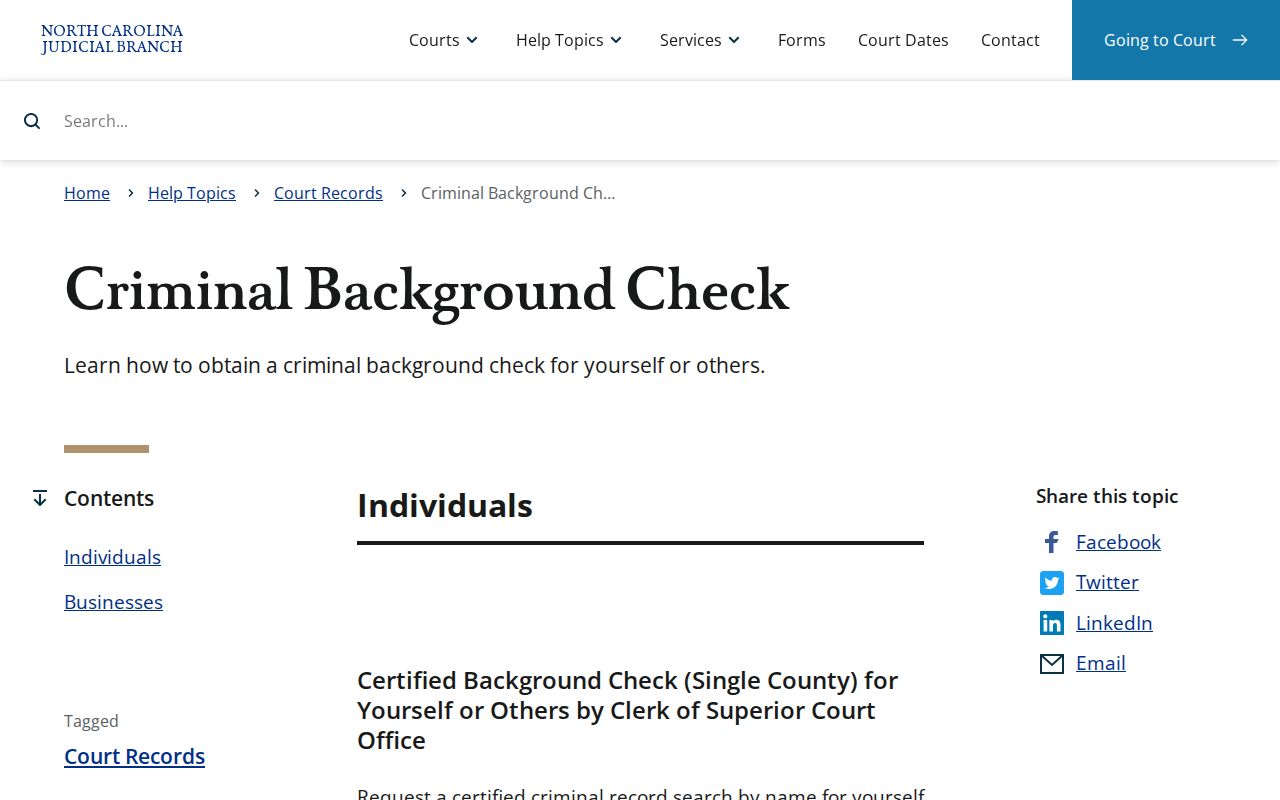
Its distinctions matter because certified, noncertified, and fingerprint-based records are not interchangeable.
Review Your Duplin SBI Record
A Duplin County resident who finds a missing disposition should first compare the SBI record with the clerk's case file. SBI's Written Exception process follows a Right to Review. CIIS audits the challenged state entry and works with the agency that contributed the arrest data when an error or omission may exist. If that agency finds no error and the dispute remains, administrative hearing rights may apply.
Keep certified court orders and expunction papers. When a granted expunction has not reached a public system after several weeks, the granting clerk is the first contact. A later AOC certificate may verify certain expunctions granted after December 1, 2017. Private copies are a separate issue and do not change just because a public index was corrected.
The SBI personal review instructions identify the current form, mailing steps, and challenge route.
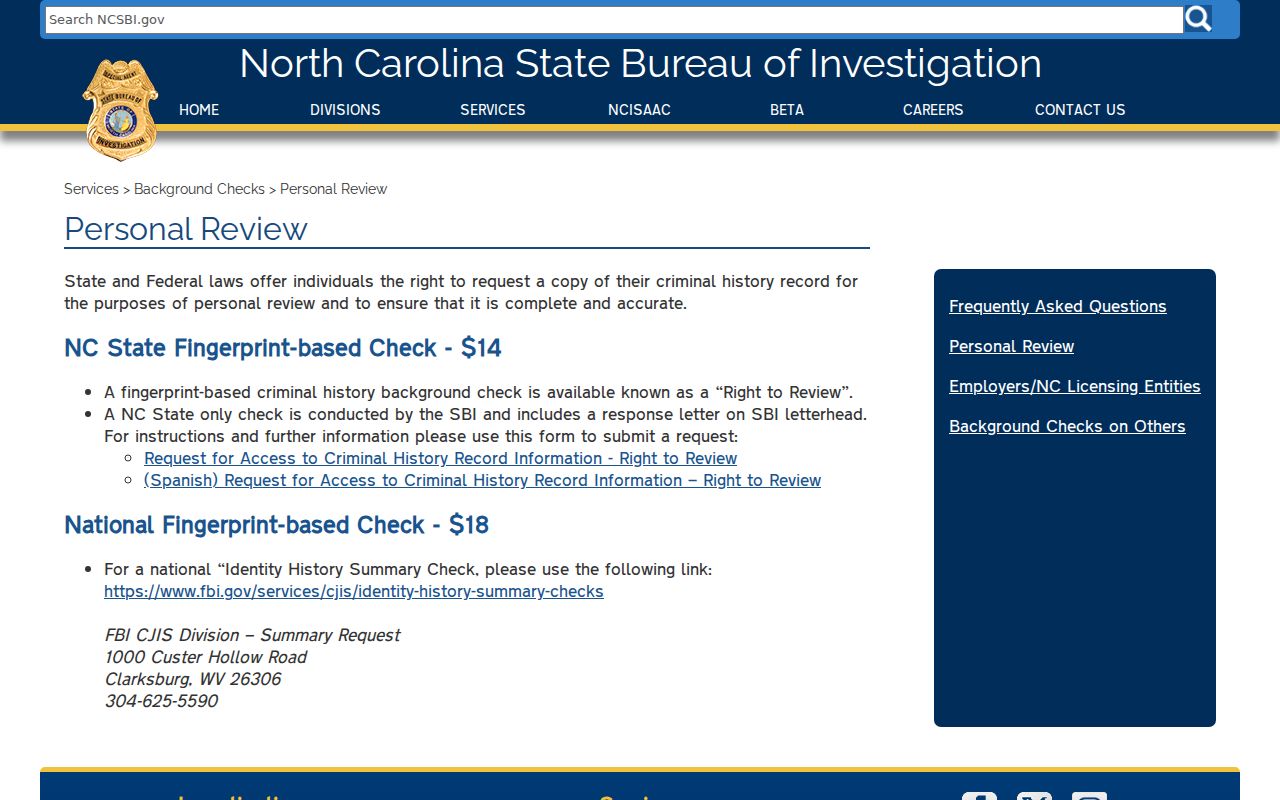
This fingerprint path is the sound choice for auditing your own statewide repository file.
Note: A name match in Duplin court records does not provide the same identity assurance as an SBI fingerprint comparison.
Types of Criminal Records
Duplin County criminal records are created at different moments. An incident report describes an agency response. An arrest entry states why custody occurred. The detention center then creates a booking and confinement record. Judicial charging papers and the court case file document what prosecutors filed and how each charge ended. SBI joins qualifying arrest cycles and reported dispositions through fingerprints, while NCDAC keeps state correction and supervision information.
- Police and sheriff reports: Request the narrative from the agency that created it; protected investigative details may be removed.
- Booking records: Use Citizen Connect or the detention center for recent county confinement and custody status.
- Court files: Use eCourts and the Duplin clerk for charges, hearings, outcomes, judgments, and copies.
- Warrant records: Confirm known case events with the clerk and sheriff because no complete public Duplin warrant search was found.
- Corrections and registry entries: Use NCDAC for state custody or supervision and SBI for the public sex offender registry.
A dismissal does not by itself erase every report or arrest entry. Each custodian applies the law that controls its own record.
Duplin Criminal Record Offices
The Duplin Clerk of Superior Court holds both District and Superior Court case files. That point prevents a common error: North Carolina does not send a reader to separate county and district clerks. Sheriff reports and county detention records stay with the sheriff. General county administrative requests can go to the county email channel, but that inbox does not become the custodian of a Judicial Branch file.
Clerk of Superior Court
112 Duplin Street
Kenansville, NC 28349
910-275-7000
Weekdays, 8:30 a.m.-5:00 p.m.
Duplin County Sheriff
112 West Hill Street
Kenansville, NC 28349
910-296-2150
Weekdays, 8:00 a.m.-5:00 p.m.
Detention Center
Sheriff's Kenansville campus
PO Box 908
910-296-2324
Call for custody questions
The official sheriff page provides the county's law-enforcement service context.
Its office remains the direct fallback for sheriff-created incident, arrest, warrant, and administrative material.
What a Duplin County Criminal Record Shows
The fields depend on the product. A court file can show the case number, division, file date, parties, charge sequence, statute, events, hearing dates, current disposition, judgment, and payment status. A booking record is a custody snapshot. An SBI record may link arrests and reported outcomes to state and federal fingerprint identifiers. Public views omit or mask full Social Security numbers and protected victim, minor, sealed, or expunged data.
| Name & Identifiers | Legal name, aliases, limited birth information, agency or state identifiers, and fingerprint control data where applicable. |
|---|---|
| Arrest / Booking Data | Arrest date, agency, alleged offense, admission, custody status, and other fields confirmed on the returned record. |
| Charges & Statutes | Offense description, law cited, offense class, sequence, and changes from original to prosecuted charge. |
| Disposition | Outcome for each charge, such as conviction, dismissal, acquittal, or another recorded resolution. |
| Sentence | Judgment, confinement, probation, fines, restitution, and other ordered terms when public. |
| Custody / Supervision | County confinement or published NCDAC prison, probation, parole, and post-release information. |
- Disposition
- The outcome of one charge, not merely the overall case status.
- Nolle prosequi
- A prosecutor's choice not to continue a charge at that time.
- Order for arrest
- North Carolina process directing law enforcement to take a person into custody, often after nonappearance or noncompliance.
- Expunction
- Statutory removal of a qualifying matter from ordinary public access.
Duplin Criminal Records Go Digital
Duplin County's present courthouse was completed and accepted on January 16, 1913. The county joined North Carolina eCourts Track 7 on February 3, 2025. That span explains why online silence is not proof that no file exists. Modern cases may have a searchable electronic event trail, while older or non-digitized papers can still require a clerk terminal, paper-file inspection, or copy request.
The official Duplin County Courthouse source identifies the building where the clerk maintains local court records.
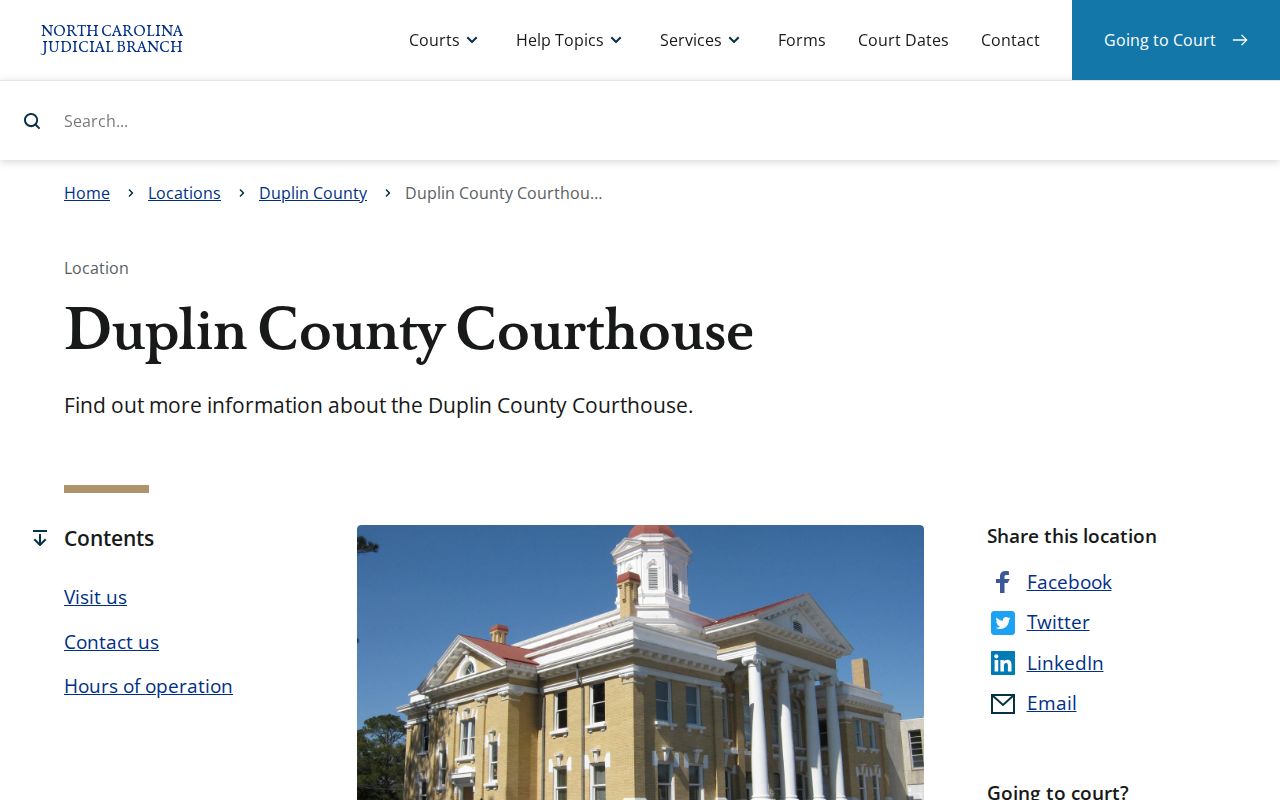
Today, that courthouse connects paper holdings, public terminals, certified searches, and the statewide Portal.
Duplin's court path is also clear. District Court handles misdemeanors and early felony stages. Superior Court hears felony trials. The district attorney decides which charges proceed, and the clerk keeps both divisions' files.
Public Access Laws
North Carolina law opens many records but not every page in an investigative file. Chapter 132 governs county and law-enforcement records. Court files instead follow G.S. 7A-109 and Judicial Branch procedures. G.S. 132-1.4 makes specified arrest and incident facts public while giving criminal investigation and intelligence records special treatment. Ask the actual custodian for segregable, nonexempt portions when part of a file must be withheld.
Key North Carolina laws:
G.S. Chapter 132 defines public records and the right to inspect or copy them, subject to statutory exceptions.
G.S. 7A-109 generally opens clerk records at reasonable times unless law or court order closes them.
G.S. 132-1.4 separates public arrest and incident information from protected investigative content.
G.S. 15A-151 tightly limits disclosure of expunged files.
Duplin County's policy, effective December 1, 2025, sets standard paper copies at $0.10 per page and electronic delivery by email or download at no cost. Extensive clerical or IT work may cost $25 per hour. Specialized staff time is charged at the actual hourly rate, and payment comes before release.
Duplin Criminal Warrant Limits
No comprehensive public Duplin County warrant-search form was located. Citizen Connect's Most Wanted list is selected, not complete. eCourts can show orders for arrest, warrants, or summons events in a known case, including issued, served, unserved, or recalled status. Yet sealed or unserved process may not appear, and online data can lag.
For a concern about your own status, check the known case in Portal, ask the clerk what the court entry means, then contact the sheriff or seek legal advice about a safe appearance. Only a court can recall process or change release terms. Do not approach a wanted person, and do not rely on a saved screen image.
Note: Duplin County Crime Stoppers accepts tips, but it is not a personal warrant-confirmation service.
Sealed, Expunged & Restricted
Restricted Duplin County records can include juvenile delinquency files, expunged matters, sealed filings, protected victim or minor details, full personal identifiers, and unserved or sealed warrants. North Carolina's statutory term is expunction. It is not a broad promise of sealing. Eligibility depends on the exact statute, complete history, offense type, time since sentence completion, pending matters, and other exclusions.
Common routes cover dismissals or not-guilty outcomes, some convictions after waiting periods, mistaken identity, and narrow juvenile-related situations. Certain qualifying dismissals and not-guilty cases disposed on or after December 1, 2021 may be expunged by operation of law, generally 180 to 210 days after final disposition, but exceptions apply. The filing fee is generally $175. Dismissal and not-guilty petitions usually have no fee unless diversion or deferred prosecution led to dismissal.
After an order, check the Duplin clerk or Portal record and obtain an SBI Right to Review. Reporting lag can persist. Save the signed order and use the formal challenge route if the state repository still shows an error.
Duplin Criminal Custody Layers
County jail, state prison, and federal custody require different searches. Citizen Connect answers current and recent Duplin confinement. Its released-inmate results are limited to the prior 24 hours, so an older booking calls for a detention or sheriff request. NCDAC Offender Search covers published state correction records dating back to 1972, including state prison and some community-supervision status. It does not cover a person whose only custody is in the Duplin jail.
The official NCDAC Offender Search shows the state system's distinct lookup route.
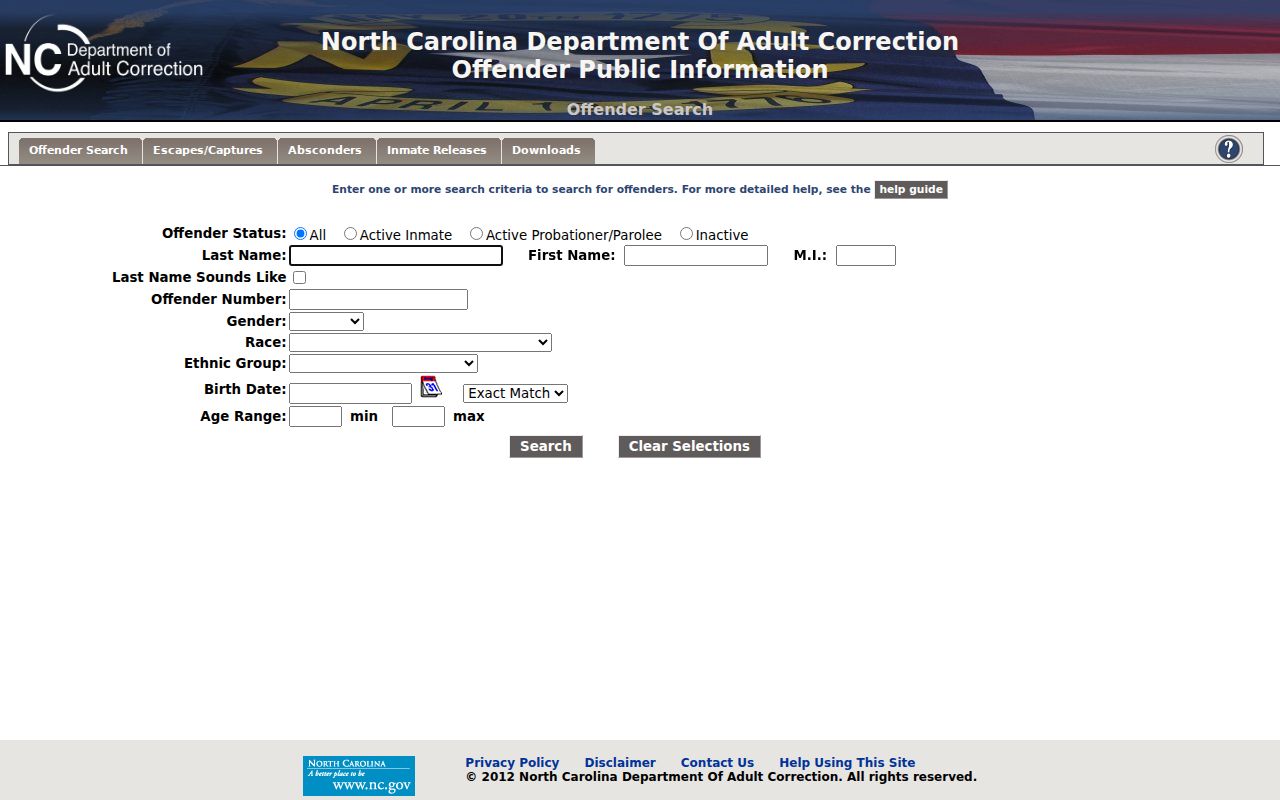
Readers can search published NCDAC records by name, offender number, status, and other available filters.
Probation, parole, and post-release supervision are state-run through NCDAC Community Supervision. The court file proves the sentence; the locator supplies published status. The Community Supervision source explains the state structure.
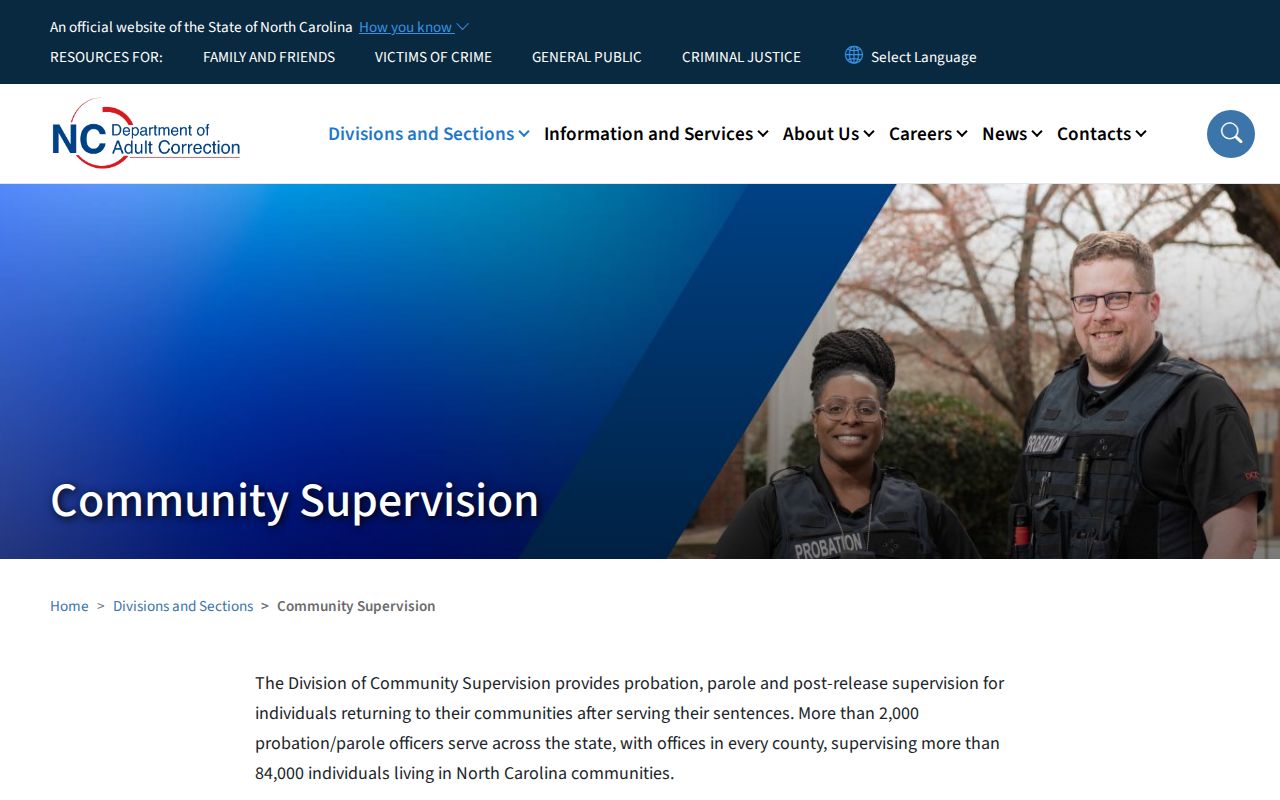
This agency layer keeps detailed supervision files apart from ordinary county court and jail records.
Federal criminal dockets for Duplin County fall in the Eastern District of North Carolina. The official Eastern District court site is the federal court starting point.
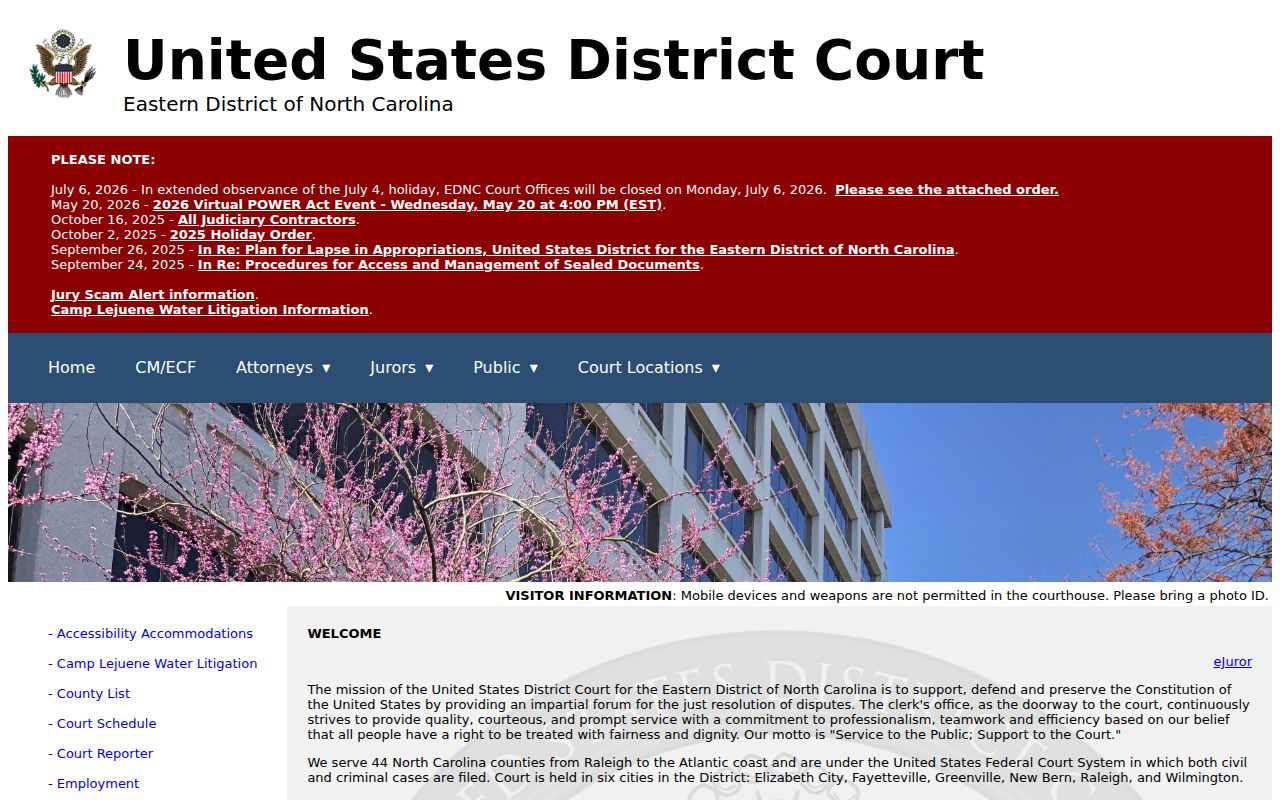
Federal docket records stay outside North Carolina eCourts and require the federal court or PACER channel.
For federal confinement, use the Federal Bureau of Prisons locator.
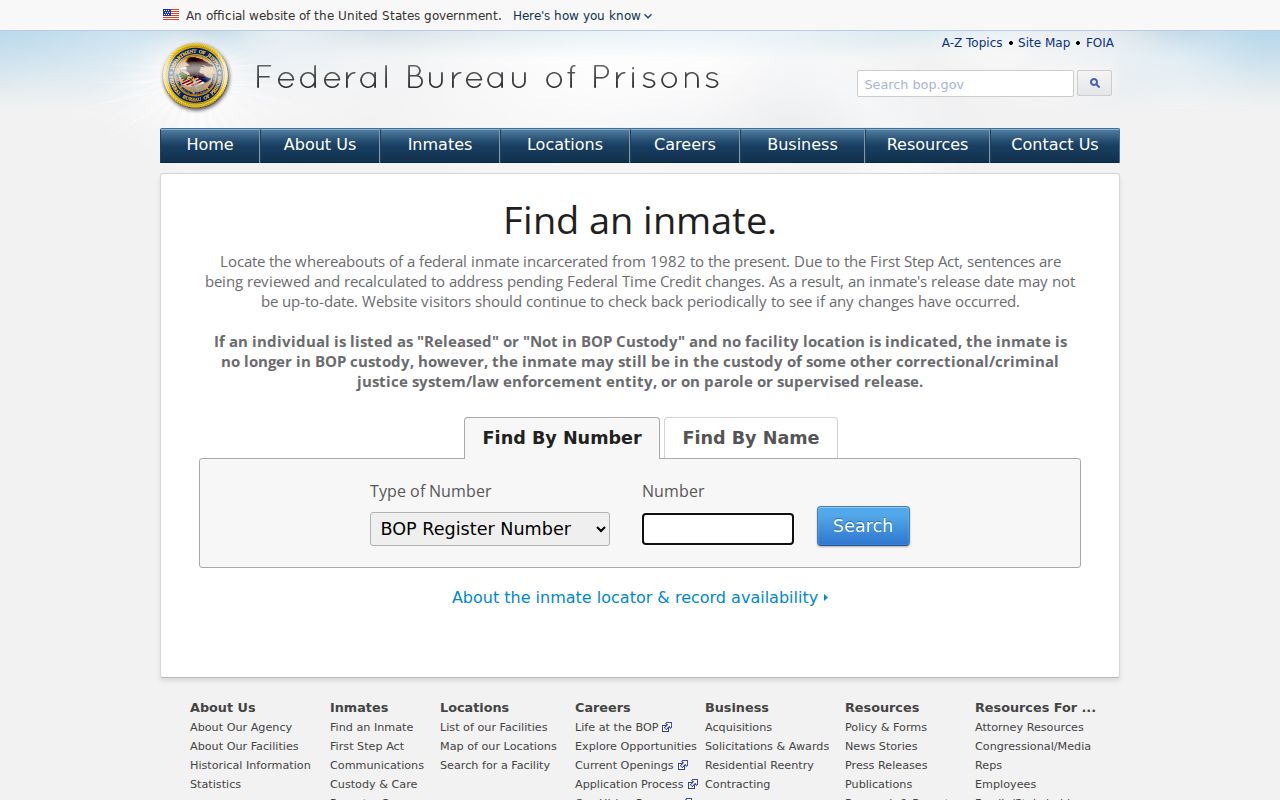
That search does not show Duplin jail detainees or people held only in NCDAC custody.
Criminal Records by City in Duplin County
Wallace, Warsaw, and Rose Hill police create their own incident and arrest reports, while county detention creates booking records and the state court system creates case files. North Carolina has no municipal courts. Charges from all three cities route to District Court or Superior Court, with the shared clerk in Kenansville. Start with the city police department for its narrative report, then use Duplin County custody and court channels for later stages.
Wallace Criminal History
3,495 in the Duplin portion · Police reports begin at 120 Municipal Drive; cases go to the Duplin courts.
Warsaw Criminal History
2,769 · Police and town-clerk channels lead to county detention and the state court file.
Rose Hill Criminal History
1,388 · The police department creates local reports; the Kenansville clerk holds the case outcome.
Duplin Criminal Records in Transition
Duplin County broke ground in 2024 on a planned 236-bed detention center costing about $44 million. County financial records describe the goal as keeping more local detainees in Duplin instead of paying other jurisdictions and potentially holding people for outside agencies. The number describes the new facility plan, not the capacity or population of the current jail. Opening status must be confirmed before assigning a record or person to the new building.
The project may change where future custody records are created and answered, but it does not shift judicial power to detention staff. Jail staff cannot decide guilt, set bond, change a court date, or alter a sentence. Those decisions remain with judicial officials and the courts. Citizen Connect and the detention phone remain the researched public custody routes unless Duplin publishes a later change.